
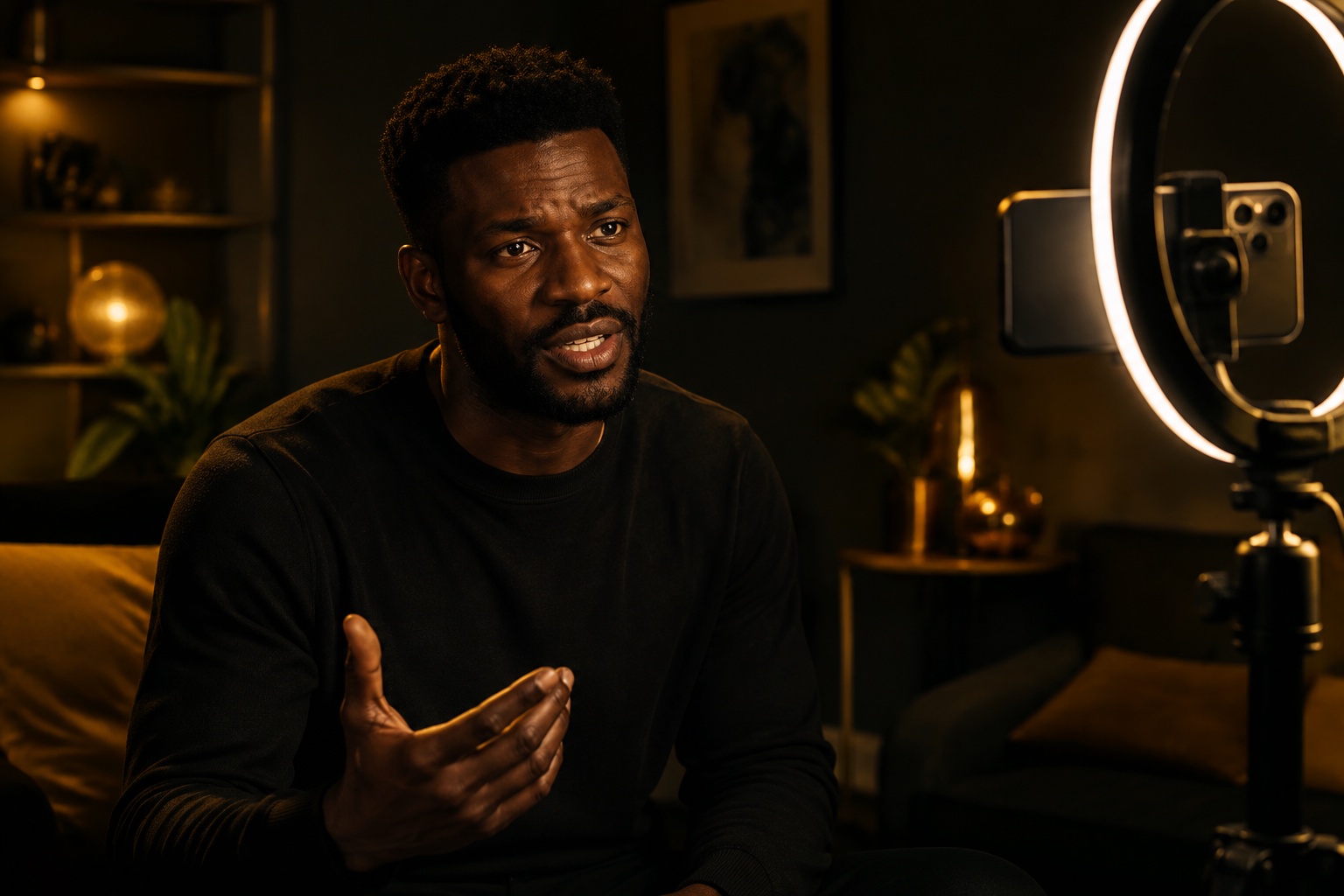
Self-Tape Secrets: How to Nail Your Nollywood Audition From Your Own Living Room
23 November 2026
Self-tapes let you audition without travelling, which matters in a country as large as Nigeria.
An actor in Port Harcourt can audition for a casting director in Lagos on the same day. You do not need expensive equipment, just care and preparation.
Casting directors watch dozens of tapes in one sitting, so a clean, well-prepared one stands out quickly.
Set up your space
Start with your background. A plain wall works best, ideally light grey, blue, or off-white, so clear away any clutter.
For light, face a window during the day, or place a lamp in front of you at night.
Avoid strong light behind you, because it turns you into a silhouette. Sound matters just as much as picture.
Choose a quiet room, switch off fans and generators where possible, and close the windows. Soft furnishings such as curtains, rugs and cushions help to reduce echo. If you must record by a noisy road, try an early morning or late evening slot when the traffic eases.
Set up your phone
Film in landscape (sideways) unless the brief says otherwise.
Place the camera at eye level on a stand or a stack of books, and frame yourself from mid-chest to just above your head.
Before you record, clean the lens with a soft cloth, since a smudged lens makes the whole tape look blurry. Use the back camera for better quality, and make sure you have enough storage and battery so nothing stops you halfway through a good take.
Use a reader
Ask a friend to read the other characters' lines from just beside the camera, speaking more quietly than you. Look at them, not into the lens, unless the brief says otherwise.
This keeps your eyeline natural and gives you something real to respond to. Your reader does not need to act. They only need to be clear and steady.
Follow the brief exactly
Your tape can be rejected if you ignore the audition instructions. If the brief asks you to slate, say your name, height, location, and the role you are auditioning for, then pause briefly before you begin.
Record only the scenes requested, and respect the file format, length, and naming instructions. Following the brief shows a casting team that you are careful and easy to work with, and that counts for a great deal.
Perform, do not just recite.
Know your lines well enough that you are not thinking about them. Make clear choices about what your character wants and how they feel, and keep the performance natural.
The camera picks up small details, so you rarely need to go big. A look, a pause, or a slight change in your voice can say more than a loud outburst. It also helps to do a few practice takes first, so you warm up and settle into the scene.
Check before you send
Watch the whole take from start to finish. Is your face well lit? Can you hear every word? Does your performance feel honest? If not, record it again. It is better to spend an extra twenty minutes than to send a tape you are unsure about. Do not feel pressured to submit your first attempt.
Send it professionally
Use a reliable link, such as Google Drive or an unlisted YouTube video. Check that the link is viewable.
Send it before the deadline with a short, polite message that names the role and thanks the team for their time.
A tidy, courteous submission leaves a good impression before they even press play.
Do you have a self-tape tip that has worked for you? Share it in the comments and help another actor get seen.
Find auditions and roles that accept self-tapes: browse auditions on Wakacast.